I see, I see what you don’t see … about valuing differences
I dare say that 80% of misunderstandings, miscommunications and conflicts between team members are based on assumptions.
As a team developer, I often start a team development project with the concept of perception; each person’s subjective interpretation. After all, we are all ‘baked’ and raised differently. We have different experiences and perspectives. This combination makes you unique, with unique talents and pitfalls.
It takes no time at all to judge
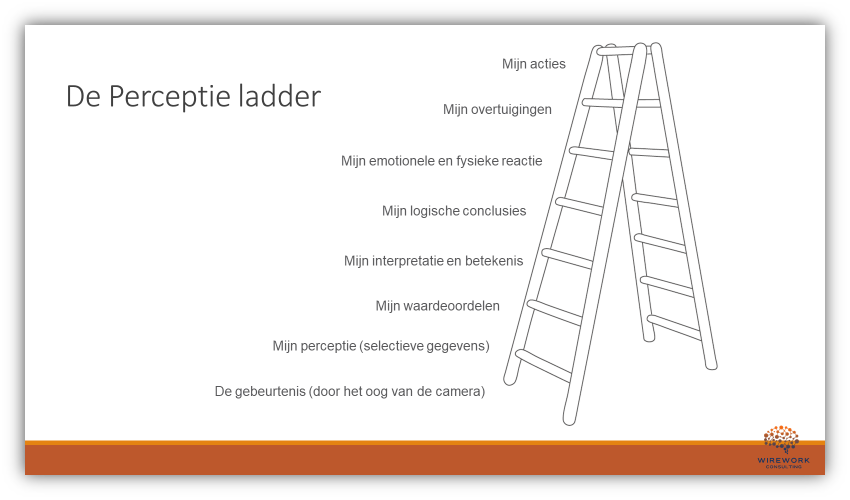
Chris Argyris’ perception ladder is a nice model to see how you climb your ladder. It happens at lightning speed and many times a day. Consider the new manager who passes you in the corridor for the third time while you are talking. Thoughts range from: he doesn’t think I’m important, what an asshole, or he’s new and doesn’t know me yet.
The trap of the reflective loop
Perhaps you recognise yourself in one of these thoughts? Did you then check your perception by joining the conversation? This part is crucial and we often skip it because things are so busy or we prefer to keep the relationship ‘good’. Well, what is good? A few more times like this and you have the reflective loop, where your beliefs influence the data you choose next time.
Inside, the assumptions pile up and your perceptions are further confirmed at the slightest hint. The result is that you start to behave accordingly. Because our behaviour is determined by the perception we have of the other person.
Non-judgmental listening makes all the difference
If you make the effort to ask open questions and listen without judgement, you will regularly be surprised by the other person’s explanation. Then there is a shift in perception. An ‘oh, is that so’ and you adjust your opinion and therefore your attitude and behaviour towards the other person. By making the effort to engage in conversation, more trust and connection are created. Understanding how things really are and a new perspective.
We can agree to disagree and both be right
Teams that apply this consistently are more solid and have more impact. They are more self-aware, effective and attuned to others. They take more responsibility and value the differences between them. And they recognise that true collaboration lies above all in the willingness to be open to each other’s ideas (without necessarily agreeing with them).

